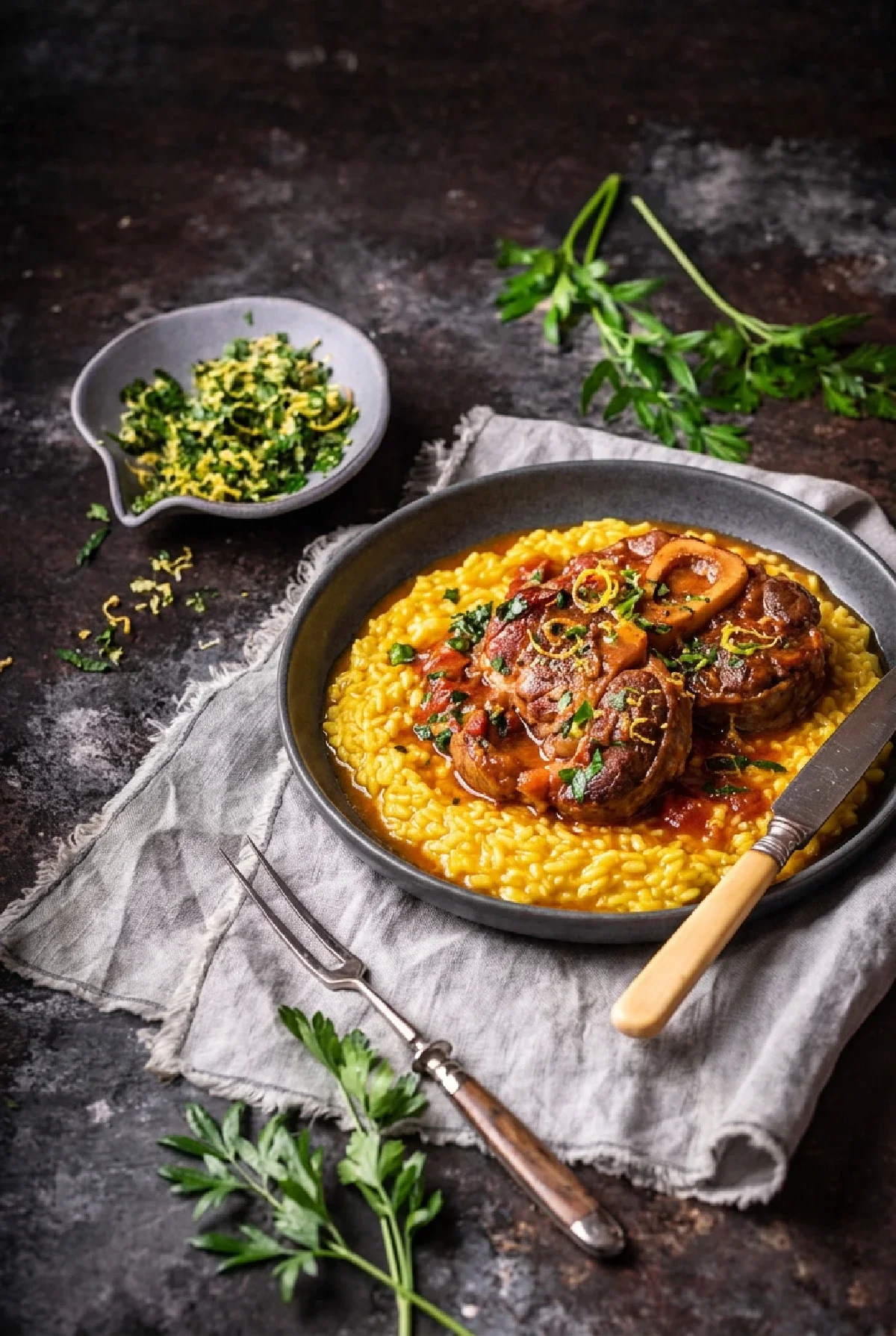
There is something deeply satisfying about a pot of Osso Bucco slowly braising in the oven while the kitchen fills with the scent of beef, wine, herbs and garlic. Served over golden saffron risotto and finished with a bright, zesty gremolata, this Milanese classic is generous, comforting and well worth taking your time over. Ask us for beef Osso Bucco cut into thick, bone-in rounds. Calling ahead means we can have it cut to around 4–5 cm thick and ready for your Dutch oven. Choose a dry white wine such as an unoaked Chardonnay or Pinot Grigio. Because the Osso Bucco cooks for several hours, you can get away with something relatively inexpensive—but make sure it is still drinkable as you will use the same wine is used in the risotto, where its flavour will be much more noticeable.
Serves 6
Preparation time: 30 minutes
Cooking time: Approximately 3 hours
Ingredients
Beef Osso Bucco
6 pieces beef Osso Bucco, cut 4–5 cm thick
Sea salt and freshly ground black pepper
75 g plain flour
2 tablespoons olive oil, plus extra if required
30 g butter
2 brown onions, finely diced
3 carrots, finely diced
2 celery stalks, finely diced
4 garlic cloves, finely chopped
350 ml dry white wine, such as an unoaked Chardonnay or Pinot Grigio
2 × 400 g tins chopped tomatoes
500 ml beef or chicken stock
2 rosemary sprigs
4 thyme sprigs
4 sage leaves
2 bay leaves
Gremolata
½ cup flat-leaf parsley, finely chopped
Finely grated zest of 1 lemon
1 garlic clove, very finely chopped
Pinch of sea salt
Risotto Milanese
1.2 litres chicken stock
½ teaspoon saffron threads
30 g butter
1 tablespoon olive oil
1 small white or brown onion, very finely diced
300 g arborio or carnaroli rice
150 ml dry white wine
60 g cold butter, diced
50 g finely grated parmesan, optional
Sea salt and freshly ground black pepper
Method
Osso Bucco
This can be done the day before as leaving it overnight helps the flavours develop even more.
Preheat the oven to 150°C conventional or 130°C fan-forced.
Pat the osso bucco chops dry with paper towel and season generously with salt and pepper. Place the flour in a shallow dish, lightly coat each piece and shake off the excess.
Heat the olive oil in a large Dutch oven over medium-high heat. Brown the meat in batches for 3–4 minutes on each side, including the edges where possible. Transfer to a plate.
Reduce the heat to medium. Add the butter, onions, carrots and celery to the same pot. Cook for 8–10 minutes, stirring occasionally, until softened and beginning to colour. Add the garlic and cook for another minute.
Pour in the wine and scrape the base of the pot with a wooden spoon to release all the browned bits. Simmer for 4–5 minutes, or until the wine has reduced by roughly one-third.
Add the tomatoes, stock and herbs. Season lightly and bring to a gentle simmer.
Return the meat to the pot, along with any juices that have collected on the plate. The liquid should come most of the way up the sides of the meat without completely covering it.
Cover with the lid and transfer to the oven. Cook for 2½–3 hours, carefully turning the meat halfway through, until the beef is very tender but still holding around the bone.
Remove and discard the herb sprigs and bay leaves. If the sauce is thinner than you would like, carefully transfer the meat to a warm plate and simmer the uncovered sauce on the stovetop until reduced. Taste and adjust the seasoning.
Gremolata
Combine the parsley, lemon zest, garlic and salt in a small bowl. Set aside until serving.
Risotta Milanese
Begin the risotto about 30 minutes before you are ready to serve. Place the stock in a saucepan and keep it at a gentle simmer. Combine the saffron with 125 ml of the warm stock in a small bowl and leave it to infuse.
Heat the butter and olive oil in a wide, heavy-based saucepan over medium heat. Add the onion and cook gently for 4–5 minutes, until soft and translucent but not browned.
Add the rice and stir for 2 minutes, until every grain is glossy and the edges are beginning to turn translucent.
Pour in the wine and stir until it has been almost completely absorbed.
Add the hot stock one ladleful at a time, stirring frequently and allowing each addition to be mostly absorbed before adding the next. After about 10 minutes, stir in the saffron and its soaking stock.
Continue adding stock and stirring until the rice is tender but retains a slight bite and the risotto is loose and creamy. This should take approximately 18–20 minutes; you may not need every drop of stock.
Remove the pan from the heat. Stir through the cold butter and parmesan, if using. Season to taste, cover and rest for 2 minutes. The finished risotto should gently spread across the plate rather than sit in a firm mound.
Spoon the Risotto Milanese into warm bowls and top with the Osso Bucco and plenty of its braising sauce. Scatter over the gremolata and serve immediately.
Cook’s notes
The Osso Bucco can be made a day ahead and gently reheated in its sauce. Like many slow-braised dishes, its flavour will be even richer the following day. Risotto, however, waits for no one. Make it just before serving and take it to the table while it is still loose, silky and piping hot.
Scroll down for printable version
SHOP THE RECIPE »

Ossobuco or osso buco is Italian for "bone with a hole" (osso "bone", buco "hole"), a reference to the marrow hole at the centre of the cross-cut veal shank. The shanks are cut into thick ‘steaks’ and braised in vegetables, white wine and broth to make the famous dish. The shanks are incredibly hard working muscles and therefore are very tough until braised for a long time.
In Australia, we often refer to this particular cut by the name of the dish itself - Osso Buco.
This cut is from the top of the shin which has a higher proportion of bone to meat than other meaty cuts of veal. The shank is then cross-cut into sections about 3 cm thick. The marrow found in the hole in the bone, a prized delicacy, is a feature of this dish.
Cooking Suggestion - Osso Bucco is best slow-cooked or braised so that the meat has time to tenderise. We recommend browning it first until caramelised to impart as much flavour into your dish as possible, and then slow-cooking until fork-tender.
Beyond Free-Range | Sustainable | Ethically Raised | Local Produce - Malmsbury

500G Pouch
This fully flavoured stock is made the traditional way with genuine Australian grass-fed free-range cattle.
“We roast the bones in small batches, slowly simmer them with our specially selected vegetables and herbs for at least 12 hours, and then reduce the liquid. “
Image and wording courtesy of The Stock Merchant.

500G Pouch
This fully flavoured stock is made the traditional way with genuine free-range Australian chickens.
“We slowly simmer the bones with our specially selected vegetables and herbs for at least 10 hours, and then reduce the liquid. The result is a stock with remarkable purity and depth of flavour. Use generously in risottos, stews, soups and more. “
Image and wording courtesy of The Stock Merchant.

Beef osso bucco with risotto milanese
There is something deeply satisfying about a pot of Osso Bucco slowly braising in the oven while the kitchen fills with the scent of beef, wine, herbs and garlic. Served over golden saffron risotto and finished with a bright, zesty gremolata, this Milanese classic is generous, comforting and well worth taking your time over. Ask us for beef Osso Bucco cut into thick, bone-in rounds. Calling ahead means we can have it cut to around 4–5 cm thick and ready for your Dutch oven. Choose a dry white wine such as an unoaked Chardonnay or Pinot Grigio. Because the Osso Bucco cooks for several hours, you can get away with something relatively inexpensive—but make sure it is still drinkable as you will use the same wine is used in the risotto, where its flavour will be much more noticeable.
Ingredients
Method
- Preheat the oven to 150°C conventional or 130°C fan-forced.
- Pat the Osso Bucco dry with paper towel and season generously with salt and pepper. Place the flour in a shallow dish, lightly coat each piece and shake off the excess.
- Heat the olive oil in a large Dutch oven over medium-high heat. Brown the Osso Bucco in batches for 3–4 minutes on each side, including the edges where possible. Transfer to a plate.
- Reduce the heat to medium. Add the butter, onions, carrots and celery to the same pot. Cook for 8–10 minutes, stirring occasionally, until softened and beginning to colour. Add the garlic and cook for another minute.
- Pour in the wine and scrape the base of the pot with a wooden spoon to release all the browned bits. Simmer for 4–5 minutes, or until the wine has reduced by roughly one-third.
- Add the tomatoes, stock and herbs. Season lightly and bring to a gentle simmer.
- Return the Osso Bucco to the pot, along with any juices that have collected on the plate. The liquid should come most of the way up the sides of the meat without completely covering it.
- Cover with the lid and transfer to the oven. Cook for 2½–3 hours, carefully turning the meat halfway through, until the beef is very tender but still holding around the bone.
- Remove and discard the herb sprigs and bay leaves. If the sauce is thinner than you would like, carefully transfer the meat to a warm plate and simmer the uncovered sauce on the stovetop until reduced. Taste and adjust the seasoning.
- Combine the parsley, lemon zest, garlic and salt in a small bowl. Set aside until serving.
- Begin the risotto about 30 minutes before the Osso Bucco is ready. Place the stock in a saucepan and keep it at a gentle simmer. Combine the saffron with 125 ml of the warm stock in a small bowl and leave it to infuse.
- Heat the butter and olive oil in a wide, heavy-based saucepan over medium heat. Add the onion and cook gently for 4–5 minutes, until soft and translucent but not browned.
- Add the rice and stir for 2 minutes, until every grain is glossy and the edges are beginning to turn translucent.
- Pour in the wine and stir until it has been almost completely absorbed.
- Add the hot stock one ladleful at a time, stirring frequently and allowing each addition to be mostly absorbed before adding the next. After about 10 minutes, stir in the saffron and its soaking stock.
- Continue adding stock and stirring until the rice is tender but retains a slight bite and the risotto is loose and creamy. This should take approximately 18–20 minutes; you may not need every drop of stock.
- Remove the pan from the heat. Stir through the cold butter and parmesan, if using. Season to taste, cover and rest for 2 minutes. The finished risotto should gently spread across the plate rather than sit in a firm mound.
- Spoon the Risotto Milanese into warm bowls and top with the Osso Bucco and plenty of its braising sauce. Scatter over the gremolata and serve immediately.
Recipe Notes
Cooks Notes
The Osso Bucco can be made a day ahead and gently reheated in its sauce. Like many slow-braised dishes, its flavour will be even richer the following day.
Risotto, however, waits for no one. Make it just before serving and take it to the table while it is still loose, silky and piping hot.