

Porchetta Ramen with Ajutsuke Tamago
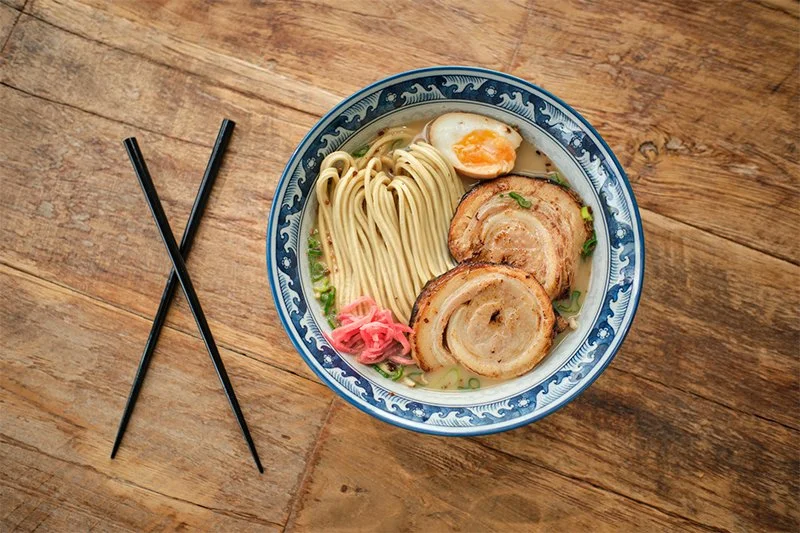
Friday was National Ramen Day, and we couldn't resist putting our own stamp on this Japanese classic. Our weapon of choice? A perfectly roasted Otway free-range porchetta.
There's something rather magical about watching Italian and Japanese traditions meet in a bowl. The porchetta, usually more at home in a crusty roll, took to the ramen like it was meant to be there all along. To take it to the next level, we made Ajutsuke Tamago, which literally translates to marinated eggs for ramen. They are super easy to prepare; they just need time and are the perfect accompaniment for this glorious broth. We love to prepare extra and keep them in the fridge for an instant healthy but so moreish protein boost during the day.
This recipe is definitely one to create over a couple of days – whilst not difficult, it does need time. Time is what will help develop the deep flavours.
INGREDIENTS
For the broth:
2kg pork bones (or 1kg pork bones and 1kg beef marrow bones)
4 pigs trotters, split lengthwise or crosswise
2 large onions, skin on, roughly chopped
12 garlic cloves
3-4 inch knob of ginger, roughly chopped
2 whole leeks, washed and roughly chopped
10-12 spring onions, white parts only (reserve greens for garnish)
900g mushrooms such as Swiss brown (use a rich mushroom rather than button for a deeper flavour and texture)
White Miso Paste and Soy Sauce to flavour
Splash of sake (optional, but rather lovely)
Vegetable oil
For the porchetta:
1kg porchetta (we love the seasoned porchetta but unseasoned works well too)
Sea salt and fresh pepper
Splash of olive oil
For the Ajitsuke Tamago:
120 ml filtered water
120 ml sake
60 mil soy sauce
60 mol mirin
50g sugar
6 large free-range Honest Eggs
Water for boiling
To serve:
4 portions good quality ramen noodles
4 Ajitsuke Tamago eggs
Spring onion green tops, finely sliced
Chilli oil
Sesame oil
Pickled ginger
Extra soy sauce to taste
METHOD
At least one day prior:
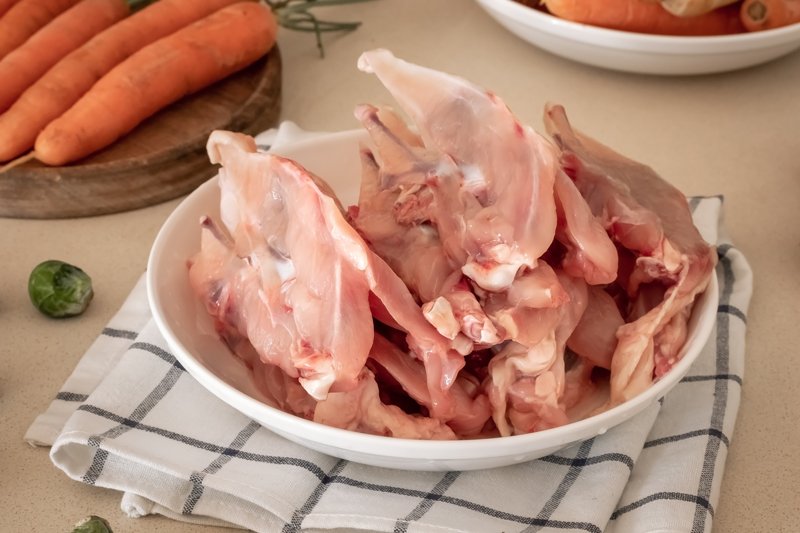
Start with the broth. Roast the bones, trotters and chicken frames at 200°C until deeply golden (about 40 minutes). Transfer to a large pot, cover with cold water and bring to a gentle simmer.
Meanwhile, in a non-stick pan, heat vegetable oil until lightly smoking. Add onions, garlic and ginger. Toss occasionally until deeply charred.
Tip bones into a clean sink and discard liquid. Scrape any marrow (if using beef bones) back into the pot. Give the remaining bones a light scrub and return cleaned bones to the pot along with the charred vegetables, leeks, spring onion whites and mushrooms. Top up with cold water. Bring to a rolling boil over high heat, skimming off any scum that appears. Reduce heat to a bare simmer and place a heavy lid on top.
Check the pot after about 15 minutes, it should now be at a slow boil. Adjust temperature if required. Keep cooking for about 8 hours, topping up water as necessary to keep bones submerged at all times. If you are away from kitchen, reduce to a simmer and then when you return, top up and bring back to a boil.
The broth should be opaque with the texture of light cream. Strain through a fine-mesh strainer, season with soy sauce and miso, and refrigerate overnight. The wait is worth it.
To prepare the eggs, in a medium bowl, whisk sugar into the filtered water, sake, soy and mirin until dissolved. Set aside.
Bring about 1.5 - 2 litres of water to a rolling boil over high heat in a medium saucepan. Tap the fat end of each egg very gently until you hear a faint “pop”— or pierce the fat end with a needle to make a very tiny hole. (This prevents them from cracking, eliminates the air bubble at the end, and makes them easier to peel.) Using a slotted spoon, carefully lower the eggs into the water and reduce heat to maintain a simmer. Cook for exactly 7 minutes for a jammy egg yolk. Remove from heat, drain off hot water and fill saucepan with cold water. Then under cold running water, carefully peel the eggs taking care not to damage the fragile whites.
Transfer eggs to a glass container with an airtight lid that fits them all in one layer. Pour marinade on top of the eggs until they are covered. Put the lid on and place in the fridge for at least 4 hours and up to 12 hours. Very gently turn the container upside down every so often so that the eggs marinate more evenly. The eggs will keep in the fridge for up to 3 days.
Remove any packaging from the porchetta. Wipe down thoroughly with paper towels. Place on a wire rack sitting inside a tray and put back in the fridge, uncovered, overnight.
On the day:
For the porchetta:
Pre-heat your oven to 220ºC (fan 200ºC). Remove pork from the fridge and wipe down carefully again – making sure you remove all moisture from the skin. Season generously with good-quality salt flakes, massaging them into the skin.
Roast at 220°C for about 30 minutes to get the crackling started. Reduce the heat to 160ºC and continue roasting for 2-2.5 hours.
Rest for 20-30 minutes before slicing into thin slices (about 1cm or less). At this point, remove eggs from marinade, cut in half vertically and set aside.
Just before serving, you can fry off the porchetta slices to reheat and get a little crispy.
The final assembly:
Warm your broth and check the seasoning. Add sake if using.
At the same time, cook ramen noodles until just tender.
Meanwhile, warm your bowls and ensure that all condiments and garnishes are ready and laid out. Good ramen is all about the assembly. The noodles wait for no one.
Layer your noodles in each bowl and top with broth. Then crown it with that crispy porchetta. Watch as the meat edges curl slighly in the steam, and the fat starts to melt into the broth below. That's when you know you've done something right.
Garnish with halved eggs, spring onion greens, pickled ginger, and a drizzle of chilli oil.
Finish with a few drops of good-quality sesame oil.
Scroll down for printable version.
SHOP THE RECIPE >>

Porchetta Ramen with Ajutsuke Tamago
Friday was National Ramen Day, and we couldn't resist putting our own stamp on this Japanese classic. Our weapon of choice? A perfectly roasted Otway free-range porchetta.
There's something rather magical about watching Italian and Japanese traditions meet in a bowl. The porchetta, usually more at home in a crusty roll, took to the ramen like it was meant to be there all along.
To take it to the next level, we made Ajutsuke Tamago, which literally translates to marinated eggs for ramen. They are super easy to prepare; they just need time and are the perfect accompaniment for this glorious broth. We love to prepare extra and keep them in the fridge for an instant healthy but so moreish protein boost during the day.
This recipe is definitely one to create over a couple of days – whilst not difficult, it does need time. Time is what will help develop the deep flavours.
Ingredients
- 2kg pork bones (or 1kg pork bones and 1kg beef marrow bones)
- 4 pigs trotters, split lengthwise or crosswise
- 2 large onions, skin on, roughly chopped
- 12 garlic cloves
- 3-4 inch knob of ginger, roughly chopped
- 2 whole leeks, washed and roughly chopped
- 10-12 spring onions, white parts only (reserve greens for garnish)
- 900g mushrooms such as Swiss brown (use a rich mushroom rather than button for a deeper flavour and texture)
- White Miso Paste and Soy Sauce to flavour
- Splash of sake (optional, but rather lovely)
- Vegetable oil
- 1kg porchetta (we love the seasoned porchetta but unseasoned works well too)
- Sea salt and fresh pepper
- Splash of olive oil
- 120ml filtered water
- 120ml sake
- 60ml soy sauce
- 60ml mirin
- 50g sugar
- 6 large free-range Honest Eggs
- Water for boiling
- 4 portions good quality ramen noodles
- 4 Ajitsuke Tamago eggs
- Spring onion green tops, finely sliced
- Chilli oil
- Sesame oil
- Pickled ginger
- Extra soy sauce to taste
Method
- Start with the broth. Roast the bones, trotters and chicken frames at 200°C until deeply golden (about 40 minutes). Transfer to a large pot, cover with cold water and bring to a gentle simmer.
- Meanwhile, in a non-stick pan, heat vegetable oil until lightly smoking. Add onions, garlic and ginger. Toss occasionally until deeply charred.
- Tip bones into a clean sink and discard liquid. Scrape any marrow (if using beef bones) back into the pot. Give the remaining bones a light scrub and return cleaned bones to the pot along with the charred vegetables, leeks, spring onion whites and mushrooms. Top up with cold water. Bring to a rolling boil over high heat, skimming off any scum that appears. Reduce heat to a bare simmer and place a heavy lid on top.
- Check the pot after about 15 minutes, it should now be at a slow boil. Adjust temperature if required. Keep cooking for about 8 hours, topping up water as necessary to keep bones submerged at all times. If you are away from kitchen, reduce to a simmer and then when you return, top up and bring back to a boil.
- The broth should be opaque with the texture of light cream. Strain through a fine-mesh strainer, season with soy sauce and miso, and refrigerate overnight. The wait is worth it
- To prepare the eggs, in a medium bowl, whisk sugar into the filtered water, sake, soy and mirin until dissolved. Set aside.
- Bring about 1.5 - 2 litres of water to a rolling boil over high heat in a medium saucepan. Tap the fat end of each egg very gently until you hear a faint “pop”— or pierce the fat end with a needle to make a very tiny hole. (This prevents them from cracking, eliminates the air bubble at the end, and makes them easier to peel.) Using a slotted spoon, carefully lower the eggs into the water and reduce heat to maintain a simmer. Cook for exactly 7 minutes for a jammy egg yolk. Remove from heat, drain off hot water and fill saucepan with cold water. Then under cold running water, carefully peel the eggs taking care not to damage the fragile whites.
- Transfer eggs to a glass container with an airtight lid that fits them all in one layer. Pour marinade on top of the eggs until they are covered. Put the lid on and place in the fridge for at least 4 hours and up to 12 hours. Very gently turn the container upside down every so often so that the eggs marinate more evenly. The eggs will keep in the fridge for up to 3 days.
- Remove any packaging from the porchetta. Wipe down thoroughly with paper towels. Place on a wire rack sitting inside a tray and put back in the fridge, uncovered, overnight.
- For the porchetta
- Pre-heat your oven to 220ºC (fan 200ºC). Remove pork from the fridge and wipe down carefully again – making sure you remove all moisture from the skin. Season generously with good-quality salt flakes, massaging them into the skin.
- Roast at 220°C for about 30 minutes to get the crackling started. Reduce the heat to 160ºC and continue roasting for 2-2.5 hours.
- Rest for 20-30 minutes before slicing into thin slices (about 1cm or less). At this point, remove eggs from marinade, cut in half vertically and set aside.
- Just before serving, you can fry off the porchetta slices to reheat and get a little crispy.
- The final assembly
- Warm your broth and check the seasoning. Add sake if using.
- At the same time, cook ramen noodles until just tender.
- Meanwhile, warm your bowls and ensure that all condiments and garnishes are ready and laid out. Good ramen is all about the assembly. The noodles wait for no one.
- Layer your noodles in each bowl and top with broth. Then crown it with that crispy porchetta. Watch as the meat edges curl slighly in the steam, and the fat starts to melt into the broth below. That's when you know you've done something right.
- Garnish with halved eggs, spring onion greens, pickled ginger, and a drizzle of chilli oil.
- Finish with a few drops of good-quality sesame oil.



The Porchetta is a boneless loin roast - and it produces incredible crackling. We can’t get enough of this easy-to-cook roast that is as good the next day sliced in sandwiches as it is as a hot roast pork dish.
You can also now order it as a boneless roast loin, unrolled and unseasoned.
Porchetta Size: 2kg or 4kg
Options: Seasoned/Unseasoned
Unrolled Pork Loin Roast
Size: 2kg-4kg
Free Range Otway Pork | Wimmera and Western Victoria | Ethical Farming